 Magic eden
Magic eden is a Solana-Only NFT Marketplace With Wallet-Signed Trading and 2% Sales Fees
Magic eden is a Solana-only marketplace where NFTs - unique blockchain records for digital items - trade through wallets, apps that hold keys and approve transactions. The service now focuses on Solana collections, fixed-price purchases, listings, offers, Packs, and a standard 2% marketplace fee on completed sales.
In short: A Solana transaction still needs SOL for network fees, even when a listing carries a 0% marketplace charge.
The 2026 Shift to a Solana-Only Marketplace
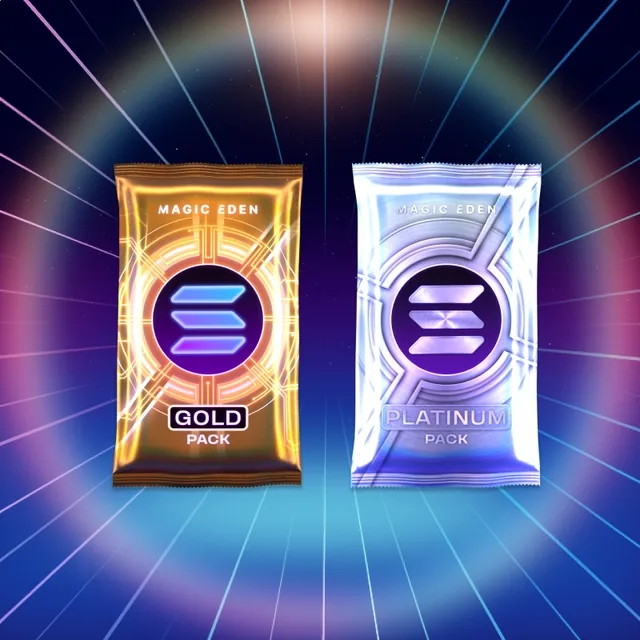
The 2026 product shift narrowed Magic Eden’s marketplace to Solana NFT trading, while preserving Packs and Lucky Buy as separate experiences within the broader platform.
The change took effect in stages. On March 9, 2026, marketplace surfaces for Ethereum, Polygon, Base, and Bitcoin Ordinals stopped accepting activity. Bitcoin and Runes services followed on March 27. The Magic Eden Wallet left app stores on April 1 and reached full shutdown on May 1. Solana Marketplace, Packs, and Lucky Buy remained available. Current buying, listing, and offer activity therefore centers on Solana assets and wallet-signed Solana transactions.
Older multichain descriptions no longer represent the core trading product. Packs remain a separate reveal experience, while the marketplace itself now serves Solana collection activity.
The Fee Stack Before a Signature
Solana sales on Magic Eden carry a 0% listing charge and a fixed 2% transaction fee when an NFT sale completes, before royalties and network costs.
The fixed marketplace rate is 2% on completed Solana transactions, while creating a listing carries a 0% platform charge.
| Parameter | Fixed Value | Supported Scope |
|---|---|---|
| Listing fee | 0% | Solana NFT listings |
| Marketplace transaction fee | 2% | Completed Solana NFT sales |
| Optional royalty choice | 0%, 50%, or 100% of creator rate | Eligible Solana collections |
| Decision baseline | No listing fee; 2% sale fee | Solana marketplace activity |
The Marketplace Charge
In one hypothetical 10 SOL sale, the 2% platform share equals 0.20 SOL, leaving 9.80 SOL from the listed price before separate royalty treatment. This concise calculation excludes the Solana network charge, which belongs to the transaction fee payer.
The Creator Royalty
Eligible collections offer three royalty selections: 0%, 50%, or 100% of the creator’s published rate. Full payment is the default. Assets with enforced royalties follow their encoded transfer rules, so the item-level checkout provides the relevant amount.
The Solana Network Cost
Solana charges a base fee of 5,000 lamports per signature, and 1 SOL contains 1,000,000,000 lamports. The base fee splits 50% for burning and 50% for the block-producing validator. An optional prioritization fee changes with requested compute units and the submitted unit price, making the final wallet quote decisive.
Wallet Connection and Transaction Approval
External Solana wallets now provide access to Magic Eden, because the platform’s own wallet ended support in 2026 and every state-changing marketplace action still needs a signature.
Connecting an Address
Phantom, Solflare, and Backpack are established Solana wallet options. A Solana public key occupies 32 bytes and appears as a base58 address. Connecting shares that public address with the marketplace and enables approval requests; the signing key remains under the wallet’s control.
Reviewing the Request
The wallet confirmation should match the item page and intended action. Four fields deserve attention before approval:
- The NFT mint or collection identity
- The SOL amount and fee breakdown
- The requested marketplace instruction
- The wallet selected as fee payer
Signing the State Change
A standard Ed25519 signature occupies 64 bytes. A sign-in message proves control of an address without changing Solana state, while a transaction signature authorizes actions such as buying, listing, canceling, or transferring. Recovery, key backup, and device compatibility now belong to the external wallet provider.
How Does a Purchase Settle on Solana?
A Magic Eden purchase settles when the connected wallet signs a Solana transaction that atomically moves the NFT, routes payment, and records the completed state change.
The marketplace prepares instructions for the relevant sale program, asset accounts, payment accounts, royalties, and fees. After approval, validators process those instructions as one atomic transaction: either every required state change succeeds, or the asset and payment movements revert together. A regular recent blockhash remains valid for 150 blocks, so an expired request must be rebuilt and signed again. Solscan, Phantom, or another Solana explorer interface then shows the signature, account changes, and resulting owner.
The decisive checkpoint is the confirmed owner address and balance movement, rather than a temporary success message displayed before network confirmation.
Listings, Offers, and Escrow
Fixed-price listings, item offers, collection offers, and instant sales give Magic Eden users several order paths without leaving the marketplace’s Solana trading interface at any point.
A listing sets an asking price for one NFT, while bulk listing applies prices to several selected items. Item offers target a specific mint and must reach at least 50% of its Buy Now price. The standard expiry menu includes 1 day, 3 days, 7 days, 1 month, and a custom period. Collection offers target eligible items across a collection rather than one chosen mint.
Magic Eden escrow supports up to 100 offers from one shared SOL balance. An offer becomes inactive when that balance cannot cover it. Adding SOL can reactivate older offers, so unwanted orders should be canceled before an escrow top-up. Withdrawals move unused bidding funds back to the main wallet.
Supported Solana NFT Formats
Four Solana asset families receive Magic Eden marketplace support: legacy Token Metadata NFTs, programmable NFTs, Metaplex Core assets, and compressed NFTs built with Metaplex Bubblegum.
Token Metadata and Programmable NFTs
A conventional Metaplex Token Metadata NFT uses a mint with a supply of 1 and 0 decimal places. Its ownership, metadata, and collection records span at least 3 accounts. Programmable NFTs add Token Authorization Rules that evaluate permitted transfer operations.
Metaplex Core Assets
Metaplex Core stores an asset’s essential ownership and metadata references in 1 Solana account, avoiding the token and associated-token account structure used by legacy NFTs. Plugins add attributes, delegates, and royalty behavior at asset or collection level.
Bubblegum Compressed NFTs
Metaplex Bubblegum places compressed NFT state in concurrent Merkle trees rather than creating a full account set for every item. A Digital Asset Standard API supplies indexed data and proofs. Magic Eden recognizes compressed collections, but their Merkle-tree structure makes the format worth checking before transfer.
Collection Pages, Traits, and Aggregation
Collection pages on Magic Eden organize Solana listings by price, traits, owner data, and source, while aggregation broadens the inventory shown for a purchase decision.
Trait filters narrow a collection by metadata fields such as background, clothing, or edition attributes. The displayed floor represents the lowest active asking price, not an independent appraisal of every item. Rarity views derive relative scarcity from available trait data, so incomplete or changing metadata affects the ranking. Solana aggregation also surfaces eligible listings from other marketplaces and lets sellers cancel an external listing before relisting through Magic Eden. Source, mint identity, and checkout terms should align before the final decision.
Creator Royalties and Enforcement
Creator royalties on Magic Eden are separate from the 2% platform fee, and the collection’s asset standard determines whether the selected royalty remains optional or enforced.
For eligible collections outside MIP-1 enforcement, buyers select 0%, 50%, or 100% of the creator rate, with 100% selected by default. Metaplex Core records royalty percentages in basis points: 100 basis points equal 1%, while 500 equal 5%. A Core royalties plugin supports as many as 5 creator addresses, and their allocation shares must total 100%. Asset-level plugin settings can override collection-level settings.
The checkout total therefore combines the sale price, platform charge, chosen or enforced royalty, and Solana network cost. The final royalty line belongs in the purchase decision, which is walked through in Magic eden compared.
Fit and Trade-Offs for Solana Collectors
Broad Solana discovery, listing tools, and offer liquidity make Magic Eden useful for collectors who accept the marketplace’s asset, price, and metadata trade-offs during trading.
The strongest use cases include browsing established collections, filtering by traits, sweeping several listings, managing bulk sales, and placing collection-wide bids. Creators also receive automatic Solana collection indexing and can claim presentation controls through Creator Hub. Aggregation reduces the need to inspect every marketplace separately when comparing active asks.
NFT prices remain live market inputs, and the floor does not measure long-term value. Metadata remains editable when an update authority retains that power, while externally stored media relies on its storage location remaining available. Completed Solana settlement is irreversible. Thin order books also create wide gaps between the lowest listing and highest offer, so collection liquidity should match the intended holding or exit plan.
When Is Tensor or Exchange Art the Better Fit?
Tensor suits active Solana traders who need automated market-making orders, while Exchange Art gives stronger context to editions, auctions, and artist-led primary sales than Magic Eden’s broad interface, as explained in Magic eden walkthrough.
Tensor applies a 0% maker fee and a 2% taker fee to its standard marketplace, then adds TensorSwap bonding curves, collection bids, and configurable market-making orders. Those controls reward close order management and expose more pricing parameters. Exchange Art concentrates on individual artists, editions, primary releases, and auction formats across Solana and Ethereum. Creators building custom drops at program level can also use Metaplex Candy Machine with Umi before choosing a secondary venue.
From the 2021 Launch to the Current Scope
A 2021 Solana launch established Magic Eden before the marketplace expanded across several chains and returned to a Solana-only core during the 2026 transition period.
That history explains the conflicting descriptions found in older material. Ethereum, Polygon, Base, Bitcoin Ordinals, and Runes once formed meaningful parts of the product, while the Magic Eden Wallet offered multichain account access. The current marketplace identity is narrower: Solana trading, Solana offers, Packs, and selected adjacent experiences.
A current Magic eden search therefore requires a date-aware reading. Wallet choice, Solana asset format, total checkout cost, and venue fit now frame the first decision.
Questions and answers about Magic eden
Is the $ME token required to buy Solana NFTs on Magic Eden?
The $ME token is not required to buy or list Solana NFTs on Magic Eden. Marketplace purchases settle with SOL for listings denominated in SOL, while some supported checkout paths use selected SPL tokens. $ME belongs to the wider Magic Eden ecosystem and rewards structure. Holding it does not replace a compatible wallet, the required transaction signature, the listed payment asset, or the SOL needed for network fees.
Can selected Magic Eden purchases use USDC or BONK?
Selected Magic Eden collections support payment with SPL tokens such as USDC or BONK, but the option is not universal across every listing. When offered, checkout routes the conversion through Jupiter before settlement in SOL. The quoted route and final wallet request matter because swap liquidity and price impact change, even though the NFT marketplace fee remains fixed.
Does a Magic Eden collection badge certify future value?
A Magic Eden collection badge identifies a recognized collection relationship; it does not certify future price, utility, or creator execution. On Solana, collection identity can derive from a Metaplex Certified Collection or verified creator data, while the item page exposes mint and metadata details. Treat the badge as an identity signal inside the interface, then base the purchase decision on asset data, sale terms, and collection-specific mechanics.
Will a Ledger device work with Magic Eden transactions?
A Ledger hardware wallet can approve Magic Eden transactions when it connects through a compatible Solana wallet interface, such as Phantom or Solflare. The hardware device keeps signing keys inside the device and requires physical confirmation. Browser support, blind-signing requirements, and transaction parsing differ by wallet and firmware, so the decisive step is whether the connected wallet presents the Solana request correctly before approval.
Why does a failed Solana transaction still cost SOL?
A failed Solana transaction still pays the network fee because validators verify signatures and attempt execution before returning the failure state. The base charge is 5,000 lamports per signature, and an optional prioritization fee adds to it. The NFT and sale payment revert together when execution fails, but the fee payer still sees the network charge deducted from the wallet balance.
When can a Magic Eden Pack represent a physical collectible?
A Magic Eden Pack can represent a redeemable physical collectible when that specific product states a redemption path through its issuing partner. Collector Crypt Pokémon Packs are the clearest example: the revealed NFT represents a graded card that can be redeemed for its physical counterpart. Standard marketplace NFTs and ordinary digital Packs carry no automatic physical claim, so the pack description defines the asset delivered after the reveal.
How does a new Solana collection appear on Magic Eden?
A new Solana collection can appear automatically through Magic Eden’s collection indexing, without a separate application for every project. Creators use Creator Hub to claim the collection, edit presentation data, and verify update authority. A fully minted collection that remains absent can require a manual submission using its Metaplex Certified Collection address, verified creator details, hash list, or compressed NFT Merkle tree information.